
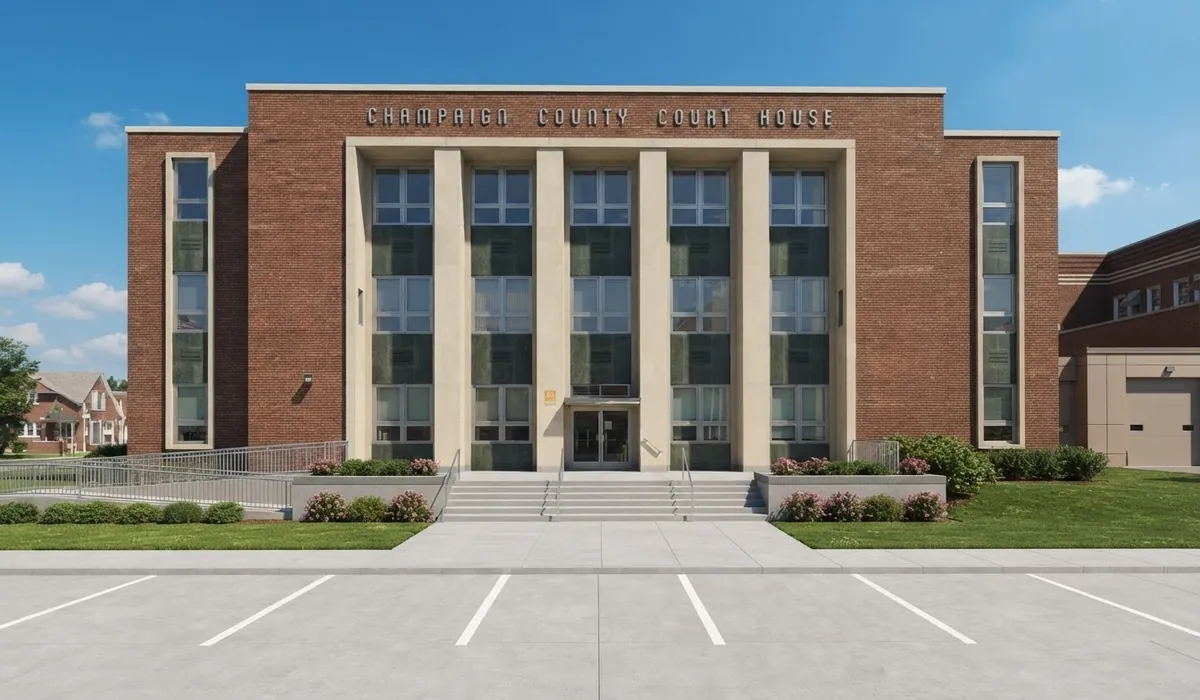
Court records in Champaign County, Ohio are maintained by the clerk of courts and can be accessed through online tools, official court portals, and the clerk's office. ChampaignOHCourt.us can help you find publicly available court record information for Champaign County. You can also search records through the Champaign County Clerk of Courts, the Supreme Court of Ohio website, and other state and federal government resources. Ohio's public records laws generally allow access to most court filings, though certain records — such as juvenile cases and sealed records — are restricted.
Champaign Court System Overview
Champaign County is part of Ohio's court system, which operates under the authority of the Supreme Court of Ohio. The county has its own Court of Common Pleas, which serves as the general trial court with divisions handling different case types. Champaign County also has a Municipal Court — the Champaign County Municipal Court — that handles misdemeanors, traffic offenses, and smaller civil disputes. Appeals from Champaign County courts go to the Second District Court of Appeals, based in Dayton. The Court of Common Pleas includes a General Division, a Domestic Relations Division, a Probate Division, and a Juvenile Division. The courthouse is located in the county seat of Urbana.
Courts Serving Champaign
Several courts serve residents of Champaign County, covering state trial-level matters as well as federal jurisdiction.
Champaign County Court of Common Pleas
Champaign County Municipal Court
Second District Court of Appeals
U.S. District Court — Southern District of Ohio (Dayton Division)
U.S. Bankruptcy Court — Southern District of Ohio (Dayton Division)
What Types of Cases Champaign Courts Hear
Courts in Champaign County handle a wide range of case types across multiple divisions:
- Felony criminal cases
- Misdemeanors and minor offenses
- Traffic violations and OVI/DUI cases
- Civil litigation (all dollar amounts)
- Small claims
- Family law — divorce, dissolution, custody, child support, paternity
- Domestic violence civil protection orders
- Probate — estates, guardianships, trusts
- Juvenile delinquency and dependency cases
- Adoption and termination of parental rights
District Court Cases in Champaign
The Champaign County Court of Common Pleas, General Division, is the county's primary trial court for serious matters. It hears all felony criminal cases, civil cases without a dollar-amount cap, and appeals from the Municipal Court. Cases typically arrive through grand jury indictment (for felonies) or by civil complaint. A Common Pleas judge presides over trials, and cases are assigned based on the court's internal scheduling. Post-conviction motions and appeals from lower courts are also handled here. If you need to look up a case filed in the Common Pleas court, contact the Clerk of Courts in Urbana or check for online docket access through the clerk's website.
Magistrate Court Cases in Champaign
The Champaign County Municipal Court handles misdemeanors, traffic violations, OVI arraignments and hearings, and preliminary hearings in felony cases before they are bound over to Common Pleas. On the civil side, the Municipal Court hears cases up to $15,000 under Ohio law. Small claims cases — with a limit of $6,000 — are also filed here. The Municipal Court uses magistrates to assist with certain hearings, particularly in high-volume dockets like traffic and small claims. If you have a minor criminal charge or a small civil dispute in Champaign County, the Municipal Court at 205 S. Main Street in Urbana is where your case will be heard.
Family Law, Probate, and Juvenile Matters in Champaign
Family Law
Divorce, dissolution, custody, child support, spousal support, paternity, and civil protection orders are handled by the Domestic Relations Division of the Court of Common Pleas. Standardized forms for domestic relations filings are available through the Supreme Court of Ohio's domestic relations and juvenile forms page. Parties may represent themselves but should ask the clerk about required documents before filing.
Probate
The Probate Division of the Court of Common Pleas manages decedent estates, guardianships, conservatorships, trust disputes, adoptions, and name changes. Probate filings are generally public, though adoption records are sealed under Ohio law. Contact the Probate Court at the Champaign County Courthouse for filing requirements and applicable fees under Ohio Revised Code.
Juvenile
Juvenile delinquency, unruly child proceedings, dependency, neglect, abuse, and custody matters involving minors are heard by the Juvenile Division. Juvenile court records are confidential under Ohio law and are not available to the general public. Victims' rights protections also apply in juvenile proceedings involving criminal conduct.
How Cases Move Through the Champaign Court System
- Filing or initiation: A case begins with a criminal complaint, civil complaint, petition, or indictment. The clerk assigns a case number and opens the file.
- Assignment to judge: The case is assigned to a judge or magistrate based on case type and the court's internal rotation.
- Initial hearing: Criminal defendants appear for arraignment, where charges are read and bail is set. Civil cases receive a scheduling conference or initial pretrial date.
- Pretrial phase: Both sides exchange information through discovery. Motions may be filed. In criminal cases, plea negotiations often occur during this stage.
- Trial or resolution: Cases proceed to a bench or jury trial, or they resolve through plea agreement, settlement, dismissal, or default judgment.
- Post-judgment: Criminal cases move to sentencing. Civil cases may involve enforcement of judgments. Either side may file an appeal to the Second District Court of Appeals in Dayton.
Court Administration, Local Rules, and Public Access in Champaign
The Champaign County Court of Common Pleas operates under the administrative authority of its presiding judge, with day-to-day operations managed by the court administrator. Local rules of court govern procedures specific to Champaign County and supplement the Ohio Rules of Civil Procedure and Ohio Rules of Criminal Procedure. Local rules are typically available at the courthouse or by request from the clerk.
Under Ohio's Public Records Act (Ohio Revised Code §149.43), most court records are public. You can request copies from the Clerk of Courts in person, by mail, or — in some cases — online. The Ohio Attorney General's public records access page provides guidance on how Ohio's public records law works. Certain records are restricted, including sealed records, juvenile records, and records involving victims' address confidentiality.
Hearings in Champaign County courts are generally open to the public. Some proceedings may be conducted by video or telephone — ask the clerk's office about remote hearing options for your specific case. For questions about court administration, contact the Champaign County Courthouse at (937) 484-1000.
Court Records and Related Court Resources in Champaign
- Court docket search: ChampaignOHCourt.us provides access to publicly available court record information for Champaign County. The Supreme Court of Ohio's public docket covers cases filed in the state's highest court.
- Court forms and self-help: The Supreme Court of Ohio provides standardized domestic relations and juvenile forms that can be used in Champaign County courts.
- Clerk of Courts / public records requests: Contact the Champaign County Clerk of Courts at the courthouse for certified copies, case file reviews, and formal public records requests. The Ohio Attorney General's office offers additional guidance on the public records request process.
- Ohio inmate search: The Ohio Department of Rehabilitation and Correction offender search allows you to look up individuals currently incarcerated in state facilities.
- County jail information: Champaign County inmates may be housed at the Tri-County Regional Jail, which serves Champaign, Union, and Madison Counties.
- Filing fees: Court filing fees in Ohio are set by statute. Ohio Revised Code §2746.04 addresses certain court fees, including those for divorce and computerization surcharges.
- Victims' rights: Ohio law provides protections for crime victims, including address confidentiality and notification rights. See Ohio Revised Code Chapter 2930 for details.
- State court system overview: The Supreme Court of Ohio website offers a directory of courts by county, attorney and judge complaint processes, and links to court services statewide.